
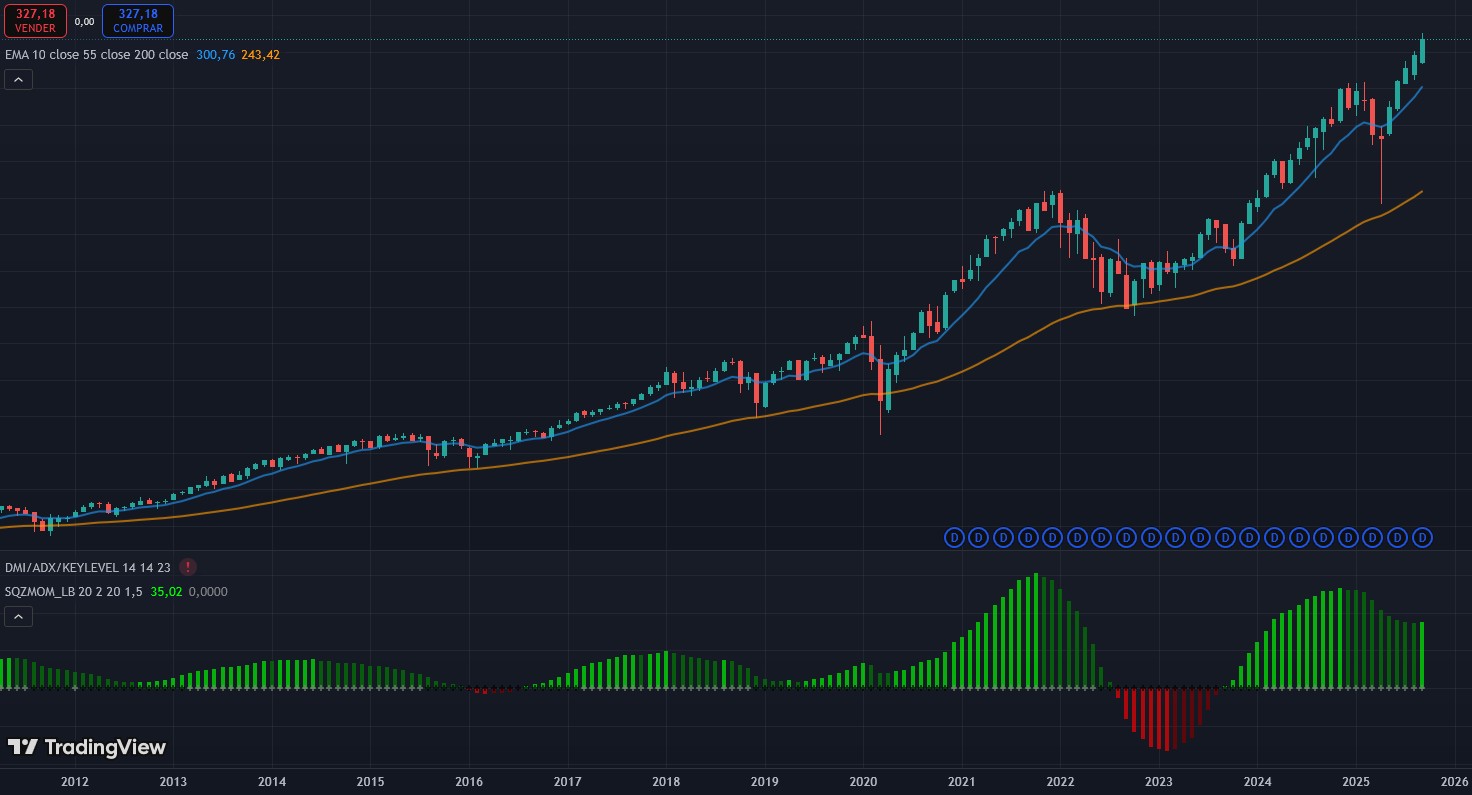
The culture of saving has been steadily eroding due to the consumerist mindset promoted by the victorious nations of World War II. Their goal was to revive the economy in the wake of the dire financial situation left by the military conflict. At that time, the supply of basic consumer goods was scarce, since production had been largely dedicated to war-related infrastructure.
Once inflation was stabilized through consumer-driven propaganda, and as the production of typical consumer goods such as more advanced household appliances increased—alongside the real estate sector boosted by lower interest rates—GDP grew for several years. Yet, as GDP rose, so did the normalization of credit within households. This has resulted in a substantial rise in overall debt, which now totals $1.21 trillion USD solely in credit card debt in the United States, and $27.1 billion USD (approximately 497.5 billion pesos) in Mexico as of 2024.
It seems we have not only forgotten how to save, but even what saving truly means—and the reasons why we should do it. Whatever your motivation may be—buying a car, a house, a new device, or starting a business—saving, not credit, should be your first option.
Planning for a personal unemployment fund or retirement (arguably the most important reason to save) is something we often overlook or simply leave to the government. However, if done independently with discipline and consistency, it could provide not only a pleasant financial surprise after a few years, but also invaluable peace of mind and long-term financial stability.
Few of us have heard about compound interest. Some may have heard of investment returns, but unless we are finance professionals, we often dismiss the subject altogether.
In simple terms, compound interest works like a snowball rolling downhill. It starts small, but as it moves forward, it gathers more snow and grows faster and faster.
The same happens in finance: if you put your money to work (for instance, in an interest-bearing account or investment), at first you earn a small amount of interest. Instead of withdrawing those gains, you leave them there. In the next cycle, you earn not only on your original amount, but also on the interest already accumulated.
Over time, interest generates more interest, and growth accelerates. This is what is commonly referred to as “interest on interest” or “making your money work for you.”
Now that we have a basic concept of compound interest, we can use it—alongside our personal goals—as an incentive to save. There are countless resources online to help with this purpose. Personally, I have created two tools, designed around my own needs, that can be used as often as necessary. I now want to share them with those who, like me, are looking to build a long-term culture of saving.
The first tool is called “Financial Goal Calculator”, which I will describe below.
- Fill in the following fields:
a. “Initial Total Amount ($)” – The amount you have available to start saving.
b. “Target Goal ($)” – The amount you want to reach.
c. “Number of Instruments” – The number of investments you will use with compound interest (such as government bonds like CETES, which use simple interest but become compound when reinvested; S&P 500; index funds; or ETFs). - After completing the above, proceed with the following fields:
a. “Instrument Name” – The name of the savings fund, index fund, or ETF used.
b. “Annual Yield (%)” – The average return percentage generated by that instrument.
c. “Weekly Contribution ($)” – The amount of money contributed weekly. Weekly contributions are proposed to encourage habit-building, since daily deposits can be difficult to maintain, while longer intervals may lead to neglect.
d. “% of Initial Amount” – The percentage of your initial capital you want to allocate to each instrument. When multiple instruments are selected, the percentage is automatically divided, though you may adjust it manually. - Once all fields are filled, click CALCULATE FINANCIAL GOAL. This will provide the “Time to Reach Goal”, expressed in weeks, months, days, or years.
- A “Investment Summary” will be generated, showing final results: how much the person contributed (Total Contributions), how much the investment generated (Interest Earned), and the total Return on Investment (ROI) as a percentage relative to the initial capital.
- An “Instrument Analysis” is also provided, breaking down how much profit each instrument contributed.
- Finally, a table called “Weekly Progress” is displayed with the first 10 savings movements and their earnings. (Note: The complete set of movements is not shown to avoid an excessively long table, but the Investment Summary accounts for the full period until the financial goal is reached.)
I hope this tool proves useful. It is a pleasure to present my first savings/investment calculator, which I frequently use for my own projections.
In a future article, I will describe the operation of the second tool—“Time-Based Savings Calculator”—which works in a similar way and allows you to apply the knowledge acquired here.
The links to both tools will be provided at the end of this article.
Conclusion
The decline of the saving culture is not an unavoidable fate, but rather a consequence of habits encouraged by an economic model that prioritizes immediate consumption over long-term stability. However, by understanding concepts such as compound interest and by using practical tools to plan our financial goals, we can regain control over our finances. Saving does not mean depriving yourself—it means securing a future with greater freedom, peace of mind, and opportunity. With discipline and consistency, small contributions can grow into significant results over time. The challenge lies in starting today, with determination and commitment, so that money works for us—and not the other way around.
https://robertorivera.net/calculadora-meta-financiera/
https://robertorivera.net/calculadora-ahorro-tiempo/
José Roberto Rivera Díaz
Deja una respuesta